Distribution network operations face complex environments with frequent faults and diverse causes. Coupled with high penetration of renewable energy sources, traditional fault-handling models struggle to keep pace. Furthermore, escalating electricity demands and heightened compliance requirements compel distribution networks to enhance fault-handling efficiency and quality. The development of new technologies and equipment is now imperative. In response, Dingxin Smart Technology has introduced a suite of solutions and products specifically designed for distribution network fault monitoring.
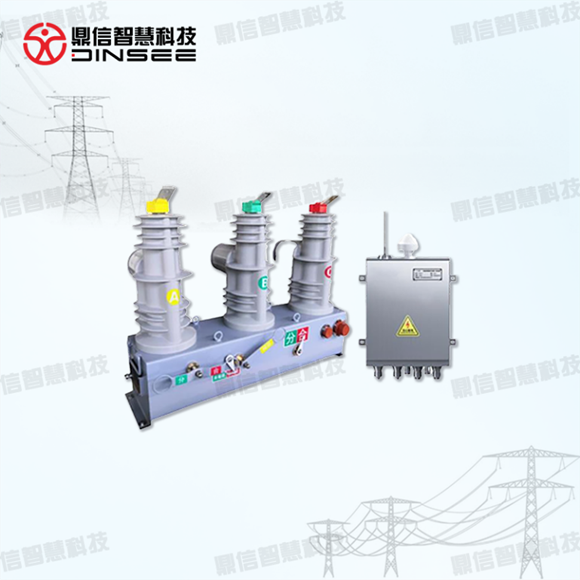
【DX-WPS100-GZ03 Distribution Network Traveling Wave Fault Early Warning and Location Device】
Directly mounted on conductors, this device leverages dual timing from BeiDou/GPS for real-time high-speed sampling and fault current/traveling wave current recording. Utilizing dual-end traveling wave location principles, it pinpoints faults within 100 meters. This enables maintenance personnel to swiftly identify weak points causing transient line faults, promptly detect and locate issues, enhance online monitoring capabilities, accurately assess equipment status, ensure safe operation of distribution network equipment, shorten fault repair times, and minimize losses from power outages.
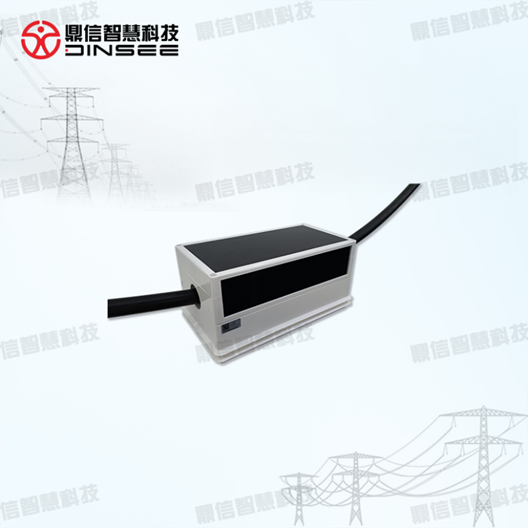
【JY-DX Type 10kV Overhead Line Transient Characteristic Local Fault Indicator】
Installation requires no power outage. The overhead transient characteristic local fault indicator not only detects short-circuit faults (including three-phase and two-phase short circuits) and ground faults but also intelligently distinguishes between selective faults and transient faults. Dual-display technology combines flip-card indicators with luminous displays, providing 360° coverage without blind spots. Day or night, rain or shine, maintenance personnel can rapidly identify fault locations from ground level. Supporting both delayed auto-reset and remote reset modes, users can preset reset times at the factory or flexibly adjust settings during operation based on actual maintenance needs. The aggregation unit supports multiple communication protocols including GSM, GPRS, RS232, RS485, and Ethernet, allowing flexible selection based on site conditions for seamless integration with power system control centers.
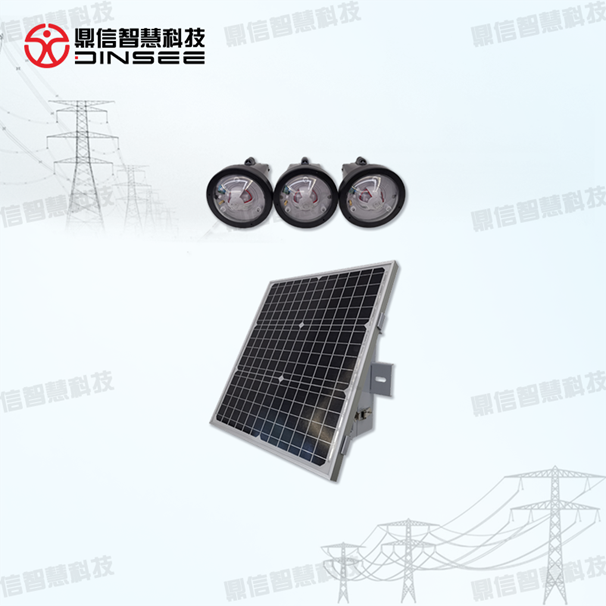
【JYL-DX Transient Waveform Fault Indicator】
Transient Waveform Fault IndicatorFeatures channel monitoring, switching, and fault alarms, along with system diagnostics and self-healing capabilities. It employs high-precision three-phase wireless time synchronization, supports three-phase synchronous fault recording, captures transient waveform signals at the instant of fault occurrence, and transmits them to the aggregation unit for synthesizing zero-sequence current waveforms used in fault determination. This enables seamless detection and localization of short-circuit and ground faults. Its data acquisition units and suspended collection units support live-line installation, further highlighting its design philosophy for efficient distribution network operation and maintenance.
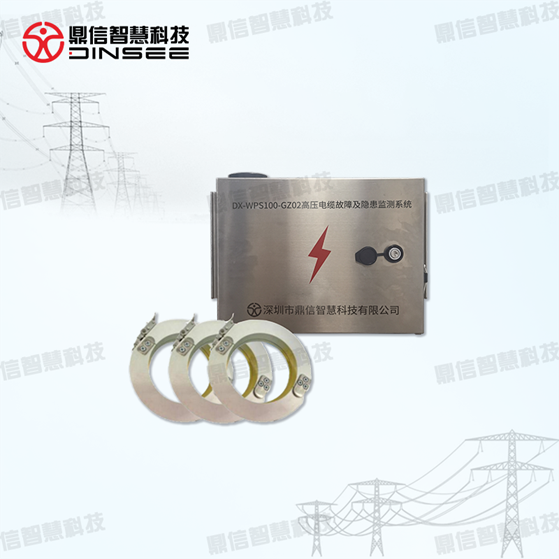
【DX-WPS100-GZ02 Distribution Network Cable Fault Locator】
The system enables real-time monitoring, early warning analysis, and localization of discharge signals caused by abnormal conditions in cable lines, thereby transforming reactive fault repair into proactive condition-based maintenance. Its distributed installation reduces monitoring distances and resolves signal attenuation issues. Utilizing single-ended/dual-ended distance measurement, it pinpoints fault locations, enabling seamless fault distance measurement, fault type analysis, and early warning of potential cable hazards.
【DX-WPS100-GZ03/PTS New Integrated Primary-Secondary Pole-Mounted Circuit Breaker Fault Location Device】
Fault-location-capable primary-secondary integrated circuit breakers are suitable for applications in line sectioning, interconnection, branching, and boundary demarcation scenarios. Capable of collecting three-phase currents, zero-sequence current, three-phase phase voltages, or one line voltage and one zero-sequence voltage on each side of the switch to achieve active power, reactive power, power factor, frequency, and energy measurement. Flexible configuration of operational parameters and control logic based on actual conditions enables handling of single-phase ground faults and phase-to-phase short-circuit faults. It provides detection and protection for phase-to-phase short circuits and single-phase ground faults in low-resistance grounding systems, along with local identification and isolation for single-phase ground faults in low-current grounding systems. It supports both centralized and local feeder automation functions (switchable via setting adjustment) and meets the three-remote configuration requirements for distribution automation.